
Platte County Criminal Court Records
A criminal court record is the court file for a prosecution. In Platte County, the Circuit Clerk files and processes criminal cases for the Circuit Court. The prosecutor's charging document starts the court side of the matter, then the docket records arraignment, bond, hearings, motions, pleas, trial settings, disposition, sentence, probation, and costs. The court file can include documents and entries that are not present in a sheriff arrest record or jail roster.
Platte County is Missouri's 6th Judicial Circuit. Felony, misdemeanor, DWI-related, and other criminal matters can appear in circuit or associate circuit divisions depending on the case stage and charge type. Municipal ordinance and traffic cases may be hosted by Division VI. For a closer look at the allegation itself, use the charge-focused page for Platte County arrest records and court charges.
The prosecutor's office is central to criminal case filing. The official Platte County Prosecuting Attorney page is one of the assigned source images for criminal court records.
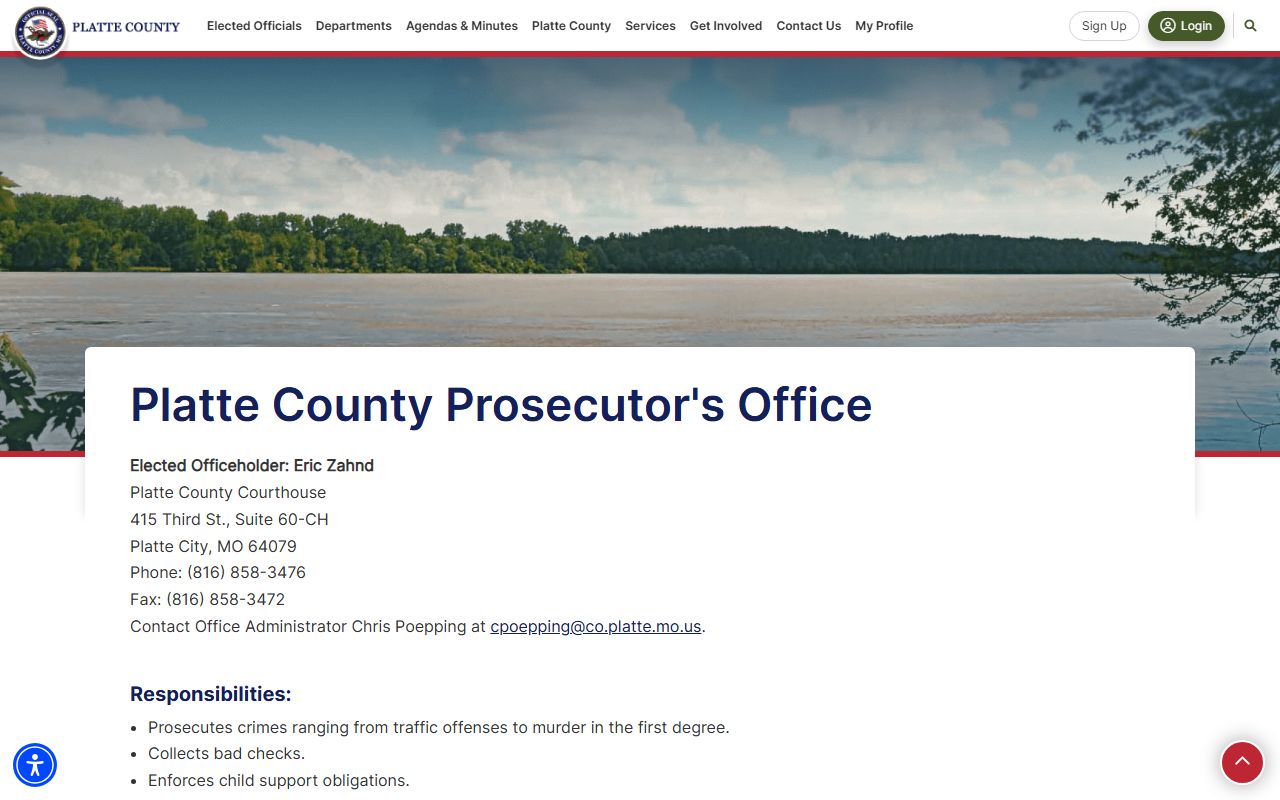
The court record begins when the prosecutor files the charge with the court, but the prosecutor's office and the Circuit Clerk have different roles.
Search Platte County Criminal Court Records
Missouri Case.net is the main public search tool for Platte County criminal court records. Search by defendant name or case number, then narrow to Platte County or the 6th Judicial Circuit where available. If a public document is not visible online, the docket can still point to the filing or order that should be requested from the Circuit Clerk.
- Open Case.net and choose litigant name search or case number search.
- Enter the defendant name, citation, or case number and check for Platte County or 6th Judicial Circuit results.
- Open the criminal case and review the charge list, bond entries, hearings, motions, plea, and disposition.
- Compare the current disposition with each charge because one case can have several counts with different outcomes.
- Request certified copies from the Circuit Clerk when a court-certified record is needed.
The Prosecutor staff directory is another official source image assigned to this criminal records page.
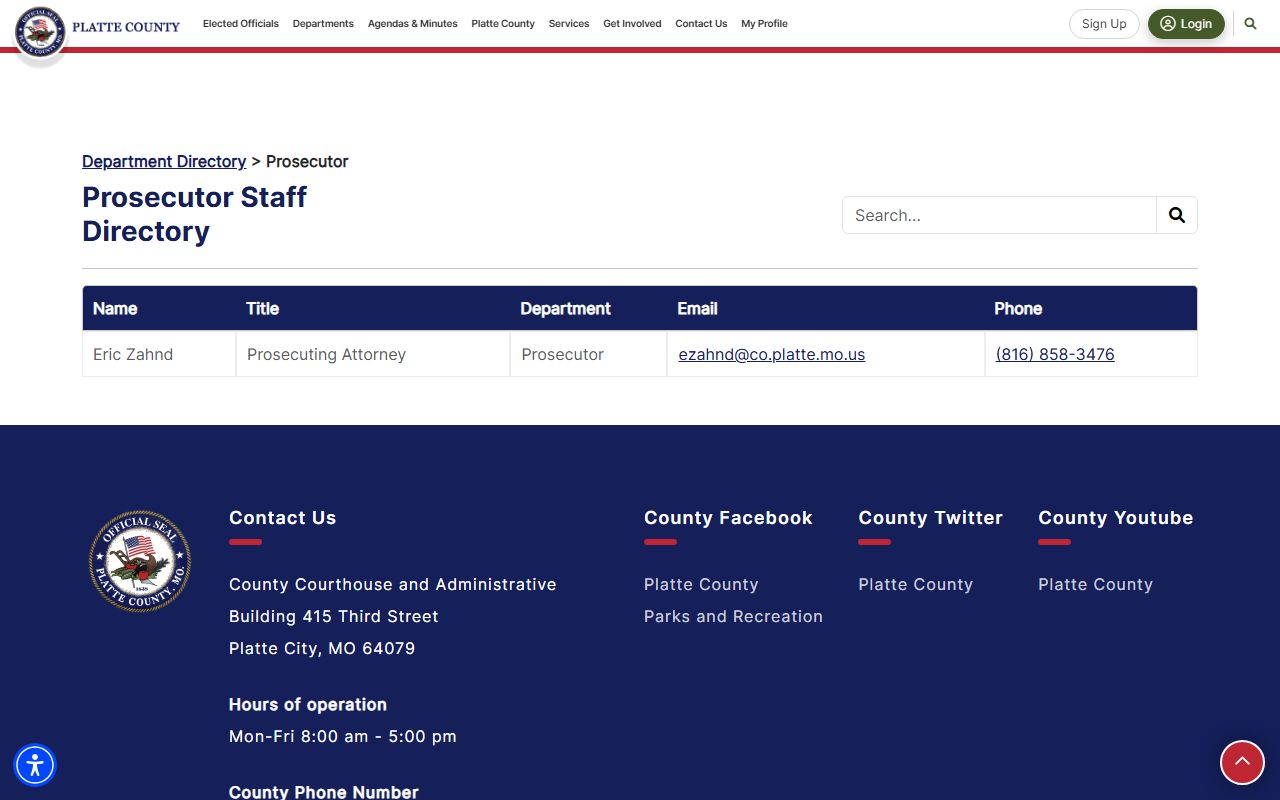
Use prosecutor office information for prosecution context, victim services, and charge-filing context, while case copies and docket entries remain a court-clerk function.
Platte County Criminal Case Flow
A criminal court record should be read by stage. The same case can start with a complaint or information, move through bond and arraignment, then change through amended charges, motions, plea talks, trial settings, dismissal, conviction, or sentencing. Docket entries are the timeline. Orders and filed documents give the detail behind the timeline.
Case flow: Charges Filed › Arraignment › Pretrial / Motions › Plea or Trial › Disposition › Sentencing
| Stage | What Happens |
|---|---|
| Charges filed | The prosecutor files a complaint, information, or indictment in court, creating the criminal case record. |
| Arraignment | The defendant is advised of the charge and the case moves to plea, bond, and scheduling steps. |
| Pretrial / motions | The parties file motions, ask for rulings, address discovery, and prepare for plea or trial. |
| Plea or trial | The case resolves by plea, trial verdict, dismissal, amended charge, or another court action. |
| Disposition and sentencing | The court records the outcome, sentence, probation, costs, dismissal, acquittal, or other final action. |
What Platte Criminal Records Show
A Platte County criminal court record can show both the accusation and the case outcome. It may include charges by statute, amended counts, bond settings, warrant events, arraignment, attorney entries, motions, hearing dates, pleas, trial events, sentence, probation, fines, costs, dismissal, and final disposition. Public records should redact protected identifiers and may suppress sealed or restricted records.
| Field | What It Shows |
|---|---|
| Case number | The court identifier for the criminal case and related docket events. |
| Defendant | The public party name unless restricted by law or court order. |
| Charges | The alleged offense, statute, count, class, and any amended or dismissed charge status. |
| Bond / warrant | Release conditions, bond entries, warrant events, recall, or failure-to-appear activity where public. |
| Plea | Not guilty, guilty, or other plea entries as recorded by the court. |
| Disposition | The current or final result for each charge, such as guilty, dismissed, acquitted, or nolle prosequi. |
| Sentence | Jail, prison, probation, suspended imposition of sentence, suspended execution of sentence, fines, or costs. |
Platte Charges vs Convictions
A charge is an allegation filed in court. A conviction is an outcome after a guilty plea or finding of guilt. A criminal court record can show charges that were reduced, amended, dismissed, or ended in acquittal. Do not read the charge list as the final result without checking the disposition for each count.
| Topic | Charge | Conviction |
|---|---|---|
| Meaning | A formal accusation filed by the prosecutor. | A final guilt outcome by plea or verdict. |
| Where it appears | Early in the docket and charge section. | Disposition, judgment, sentence, or plea entries. |
| Can change | May be amended, reduced, or dismissed. | May carry sentence, probation, costs, and appeal rights. |
Note: One Platte County criminal case can have several counts, and each count can end differently.
Defense and Criminal Case Access
The Missouri State Public Defender System provides representation to indigent citizens accused of or convicted of crimes in Missouri. Its materials say applicants should use the office locator for the county where charges were filed and may submit an application online or to the local office serving the pending case. Because office assignments can change, use MSPD's official locator rather than assuming a fixed office from an old docket.
The manifest assigned the Missouri State Public Defender homepage as a successful image for Platte County criminal court records.
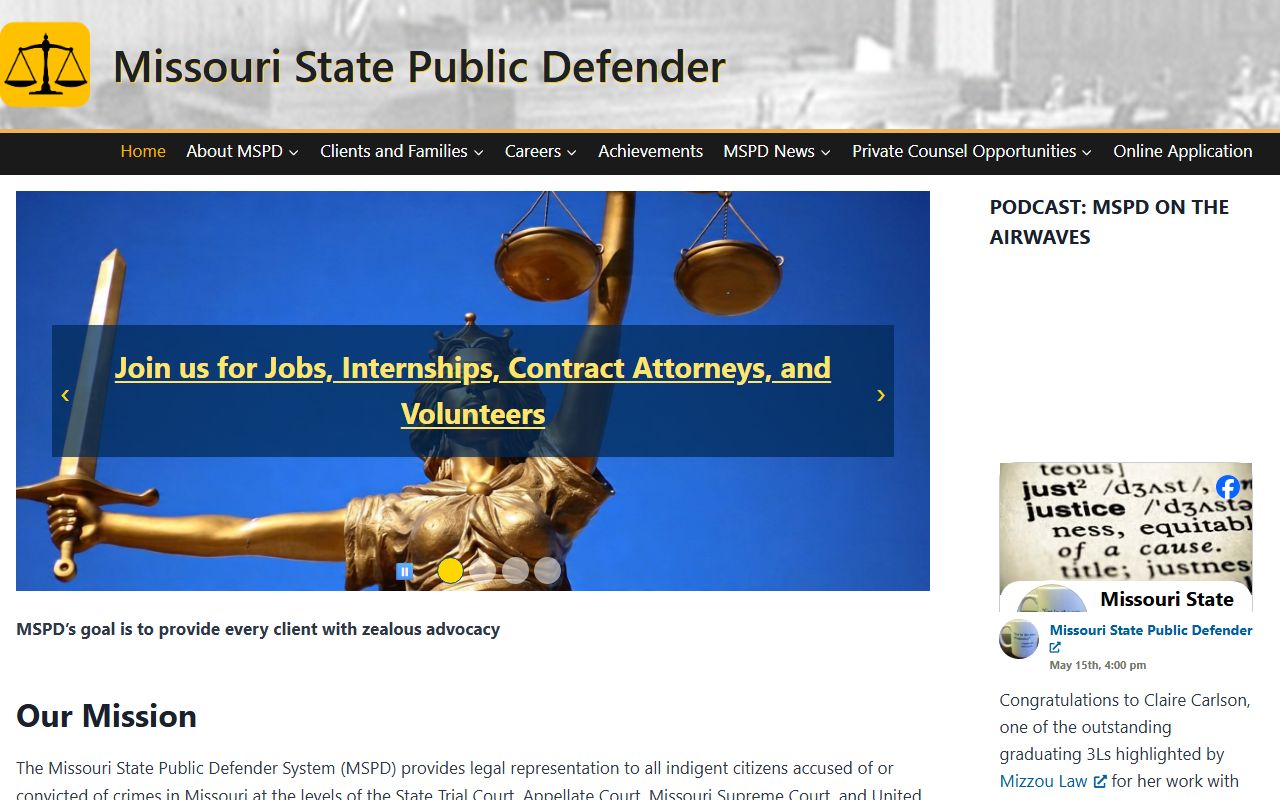
Defense resources do not replace the court docket, but they help explain the representation path once a criminal case is pending.
The public defender application instructions are also documented by the successful image from MSPD application instructions.
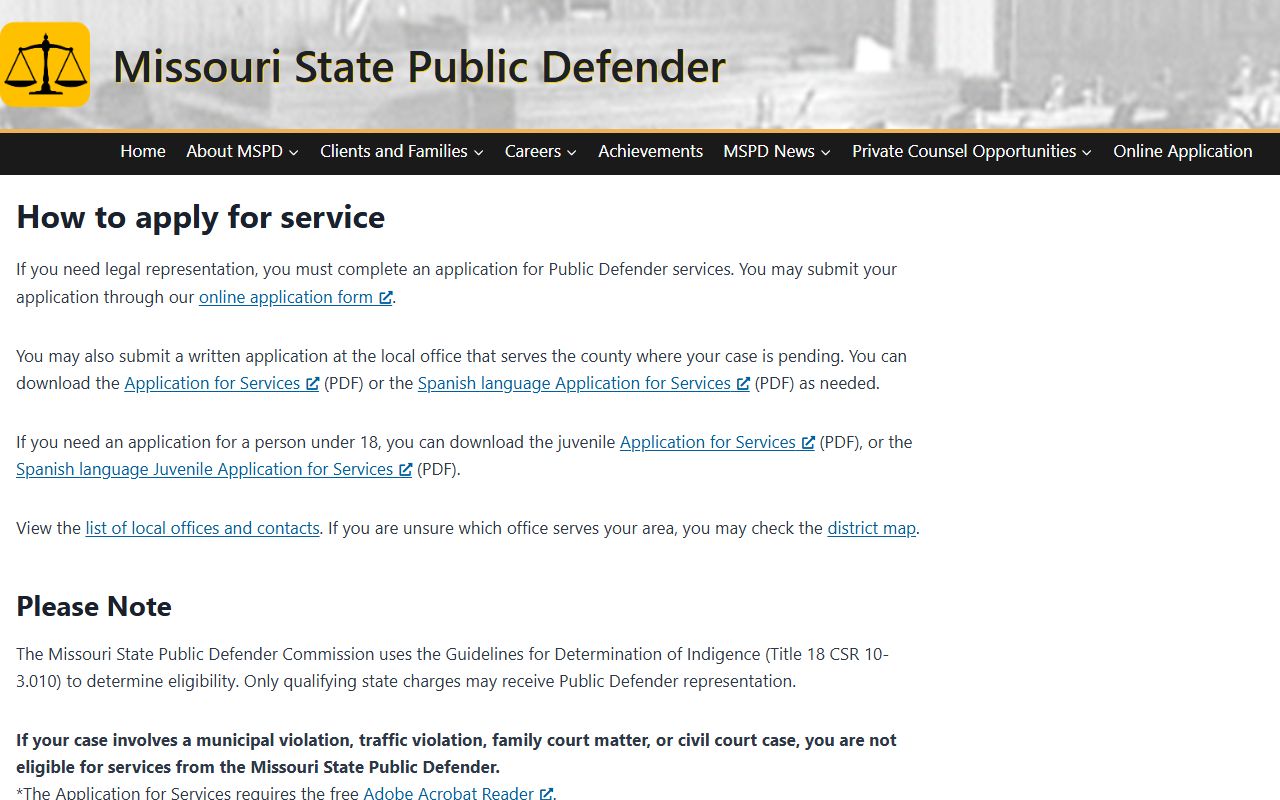
Use the court case number and charging county when applying for public defense or checking case status with counsel.
Sealed and Expunged Criminal Records
Not all criminal court records remain visible in ordinary public searches. RSMo 610.105 addresses records after dismissal, acquittal, nolle prosequi, and suspended imposition of sentence after final termination, subject to exceptions. Juvenile court records are confidential under RSMo 211.321. Expungement requires court action and does not mean every related agency updates at the same moment.
| Topic | Sealed or Closed | Expunged |
|---|---|---|
| Public visibility | Hidden or limited in ordinary public access. | Closed from ordinary public access after a qualifying court order. |
| How it happens | By statute, court order, or restricted case type. | By petition and court order under Missouri expungement law. |
| Practical step | Ask the Circuit Clerk about access authority. | Identify every case number and agency named in the order. |
Public Access to Platte Criminal Records
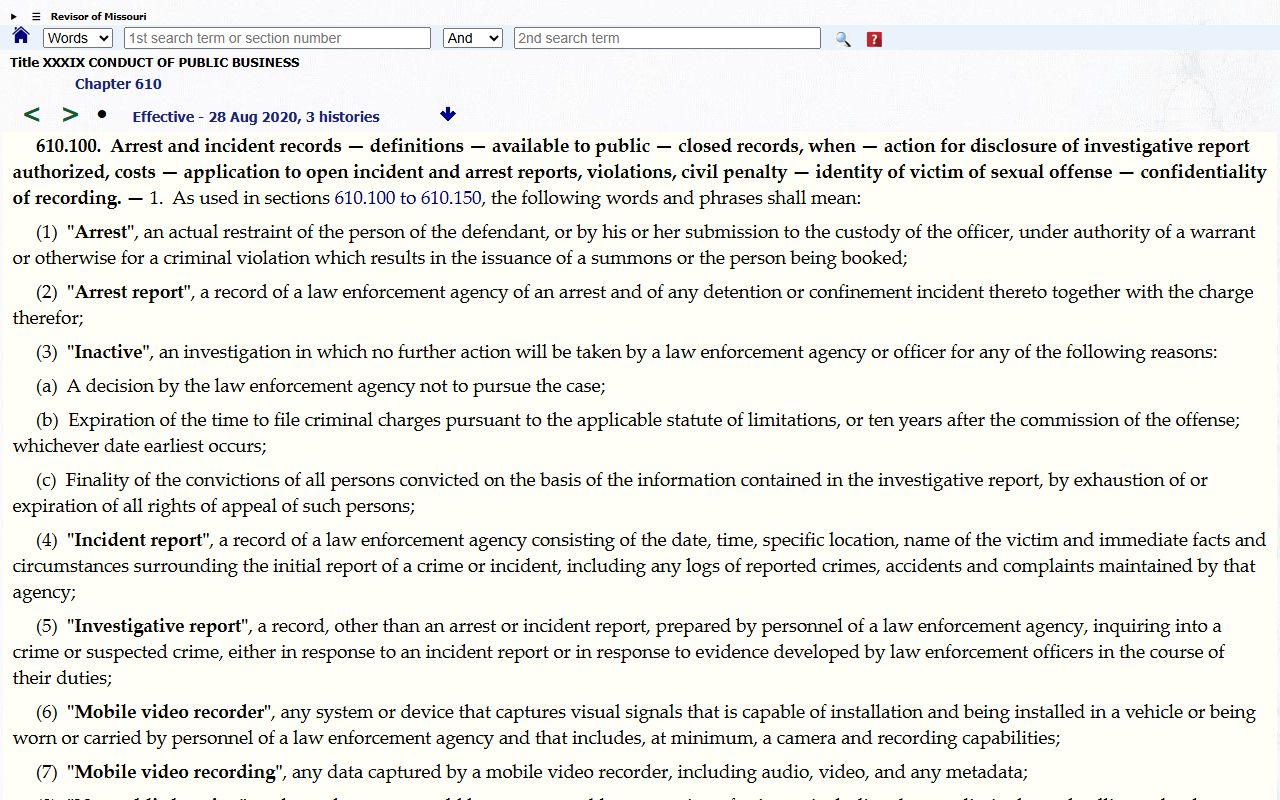
Missouri law separates court records from law-enforcement records. Criminal court records are accessed through Case.net and the Circuit Clerk when public. Arrest reports and incident records are governed in part by RSMo 610.100, which says law-enforcement agencies keep incident, investigation, and arrest records, but it also allows investigative and sensitive records to be closed in specific situations.
The criminal records image from RSMo 610.100 supports this distinction between court case records and law-enforcement arrest or investigation records.
For a full court outcome, rely on the court case. For an arrest report, use sheriff or police records channels and expect different access limits.
Restricted Platte Criminal Records
Restricted records can include juvenile matters, sealed files, expunged records, active investigative material, protected witness or victim data, mental health information, and personal identifiers. A public docket may also omit documents that are sealed, not remotely available, or not digitized. The Circuit Clerk is the right office for court-file access questions. The sheriff's office is the right starting point for sheriff reports, custody questions, and law-enforcement records requests.